The Celestial Pole and World Axis in Religion and Mythology
-

The Mithraic Tauroctony
Mithraism was a Roman mystery religion, dating to the first few centuries CE. The central image of Mithraism was the so-called ‘tauroctony’ (bull-slaying) scene in which the god Mithras stabs a bull in the shoulder. The tauroctony scene was often depicted at the centre of a zodiacal wheel, and it’s long been thought that the…
-
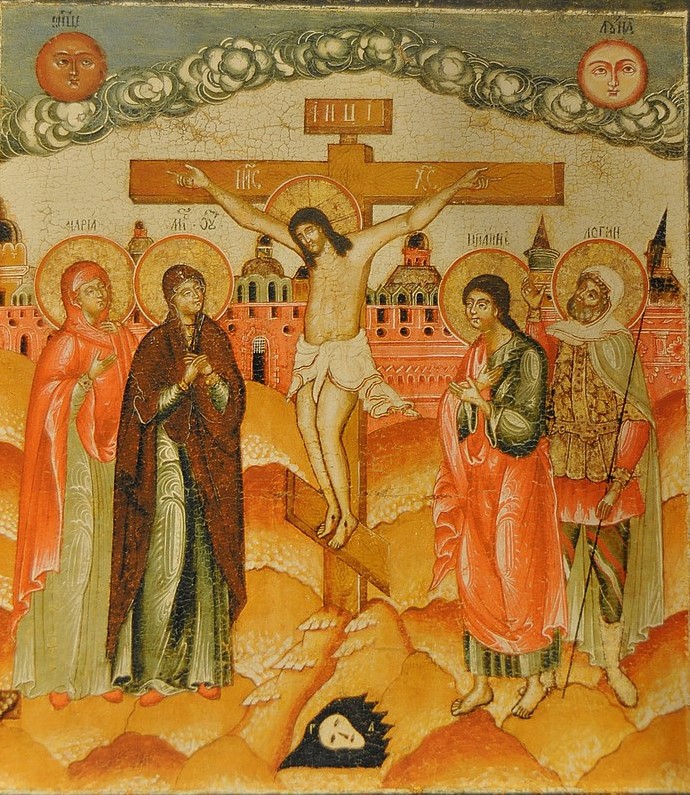
The Crucifixion, Adam and the Tree of Eden
Numerous Christian authors from the third and fourth century onwards made the connection between the crucifixion, Golgotha and Adam. The church father Origen (185 – 254 CE) wrote, ‘I have received a tradition to the effect that the body of Adam, the first man, was buried upon the spot where Christ was crucified.’ (Commentary on…
-

The Exodus as Allegory
Much of the biblical narrative relating to the bondage and exodus of the Israelites and the conquest of Canaan is clearly mythological. If there wasn’t a historical Exodus, as the archaeological evidence suggests, is there a possible allegorical meaning to the story? Allegory is after all the lingua franca of mythology and religion. A possible metaphorical…
-
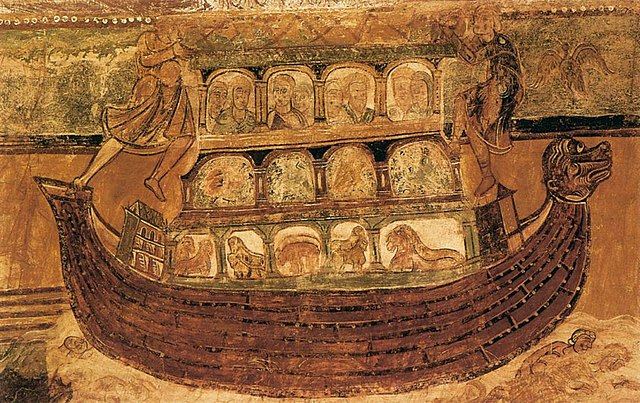
Noah and the Cycle of Flood and Conflagration
Flood myths were found all over the ancient world, but there’s no concrete evidence to suggest any of them ever represented a factual event. Many historical catastrophes have been proposed as the root of the myths, these include; a tsunami that might have followed the volcanic eruption of Thera in 1600 BCE; the sea level…
-

Sky Gods Battling Dragons
We find a battle between sky god and dragon or serpent in numerous ancient religions and myths. In the Babylonian creation myth, Marduk fought and defeated the primeval dragon Tiamat, then split her body in two to create the sky and earth. In the Enuma Elish, Marduk twists and weaves Tiamat’s tail into the durmah…
-
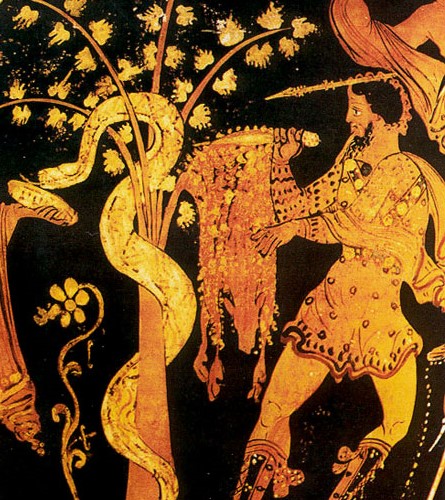
Further Adventures of the Serpent in the Tree
The motif of the serpent in the tree probably originates in ancient Mesopotamia. We find a possible allusion to it in The Myth of Etana. Tablet II tells of ‘A shrine for Hadad, the god. In the shade of that shrine a poplar was growing. In its crown an eagle settled, a serpent settled at…
-
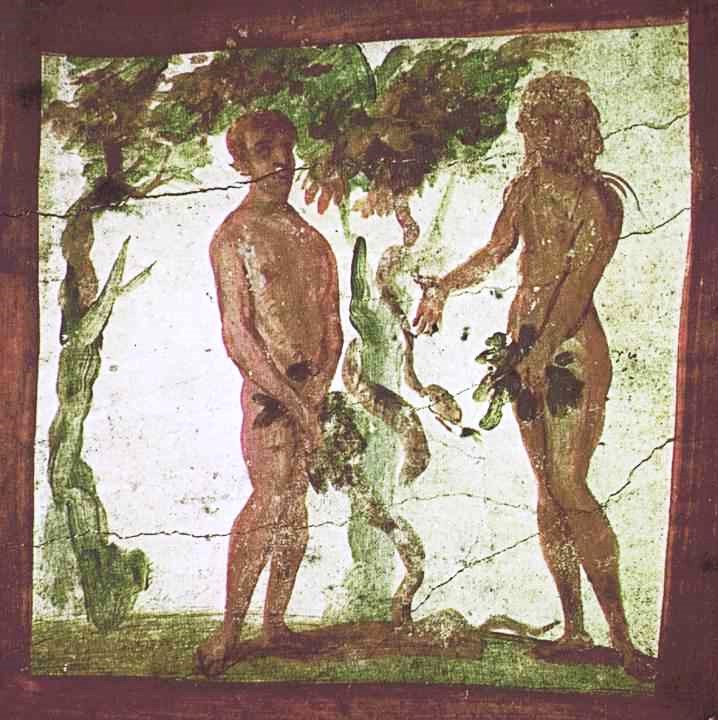
The Garden of Eden
The story of the original fall and the Garden of Eden is an easy myth to understand once one realises that a serpent (or dragon) in a tree is a scene that has parallels elsewhere in ancient mythology. The tree has been an important mythological metaphor for the world axis in many religious traditions. The…
-

Ritual Heavenly Ascents
Some priests, initiates and believers in the ancient world had visions and practiced ritual ascents to their gods. These ritual ascents were made by pagans, Christians and Jews alike. By the Roman era, they usually involved complex rituals and magical glyphs and passwords that had to be presented to the archons (a Greek word for…
-
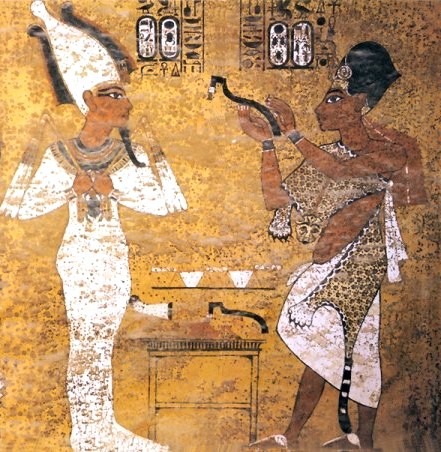
The World Axis as the Conduit Between Heaven and Earth
There’s a long and ancient tradition of religious belief in the world axis as a conduit between the sky and the earth, and the polar region of the sky as being a gateway to the divine realm. This belief goes back at least 4500 years, probably even longer. The ancient Egyptians believed that the soul…
-
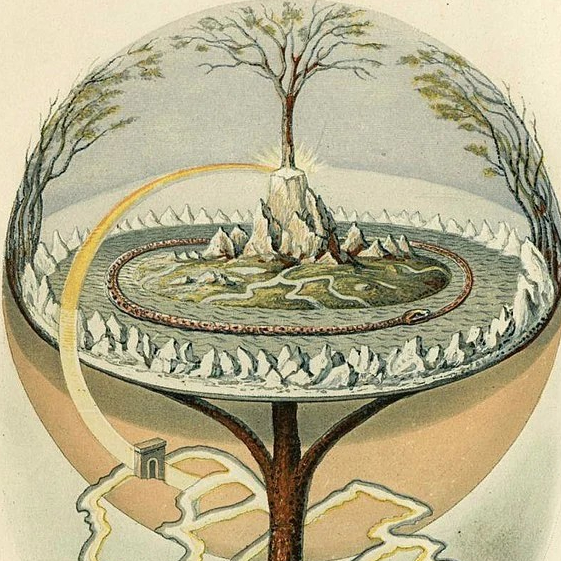
The World Tree and Holy Mountain
In religion, many symbols have been used to represent the world axis and the pole. These include the tree, column, ladder, cross, swastika, mountain, mill, whirlpool and hearth. Of these many motifs, the tree has probably been the most historically important, and it’s a simple metaphor to visualize. The trunk represented the central axis of…
-
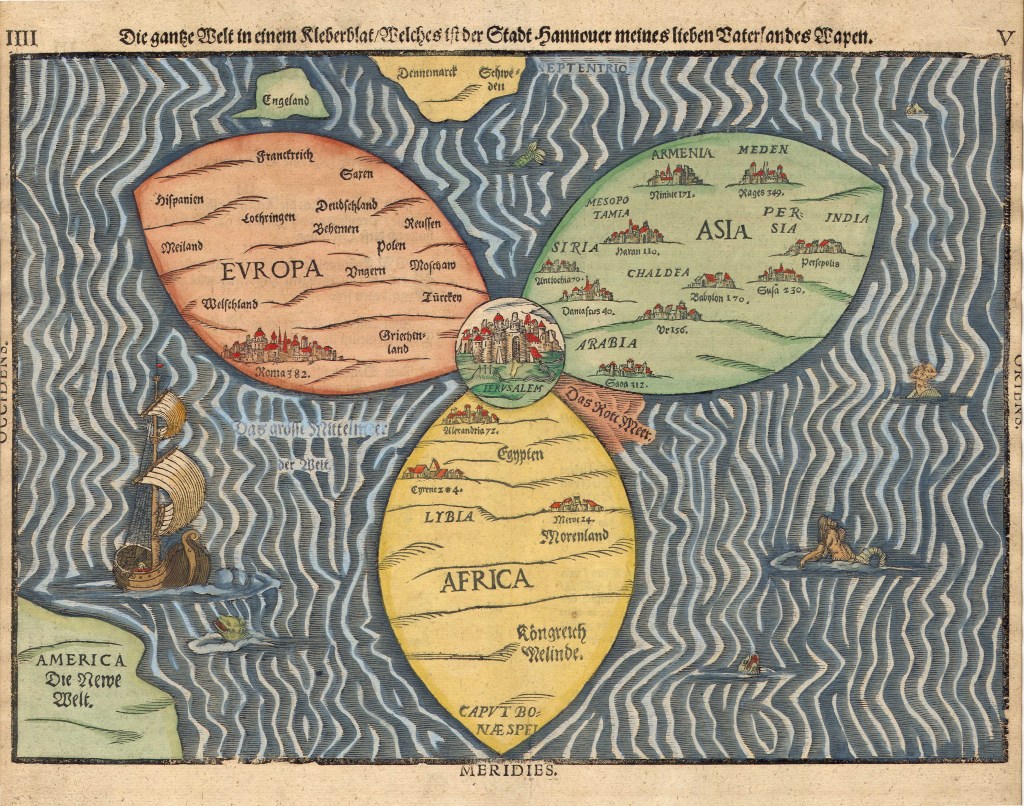
The Omphalos or Navel of the Earth
Many ancient civilizations believed in a navel or sacred centre, the earthly end of the world axis. For the Sumerians it was Nippur, for the Babylonians it was Babylon, for the Greeks it was Delphi, for the Jews and Christians it’s Jerusalem, for Buddhists it’s Bodh Gaya, and for Muslims it’s Mecca. One of the…
-

The Celestial Pole and World Axis
As viewed from the earth, all the stars in the night sky appear to revolve around one pivotal point, the celestial pole. This is the extension of the earth’s North Pole into space. It’s at the centre of the whole celestial dance, and is thus the logical seat for the conductor. Due to precession (that’s…
-

The Sacred Numbers Seven and Twelve
The numbers seven and twelve played a central part in ancient religion, particularly those from the first millennium BCE. In Greek mythology, Pan had seven reeds in his pipe, Zeus had seven consorts, and there were originally seven Titans. In Mesopotamia (ancient Iraq), the Babylonian goddess Ishtar removed seven items of clothing in her descent…
-
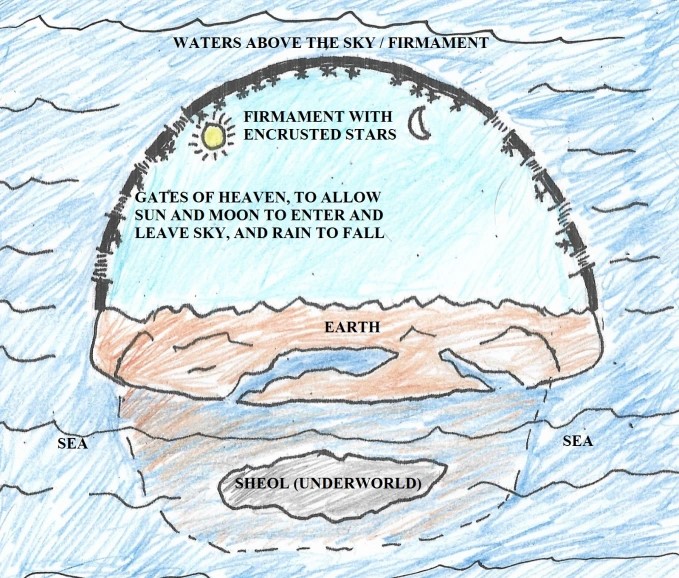
Ancient Cosmology
The first key to understanding ancient religion is realizing that the ancients had a vastly different view of the universe to ourselves. The earliest civilizations believed in a flat earth which was either a circle or a square, depending on the tradition. Above the earth, the heavens / sky was seen as being a dome.…
-
Hello World!
Welcome to WordPress! This is your first post. Edit or delete it to take the first step in your blogging journey.
Got any book recommendations?
 World Axis